
A wet hand on a geyser switch. A washing machine with…
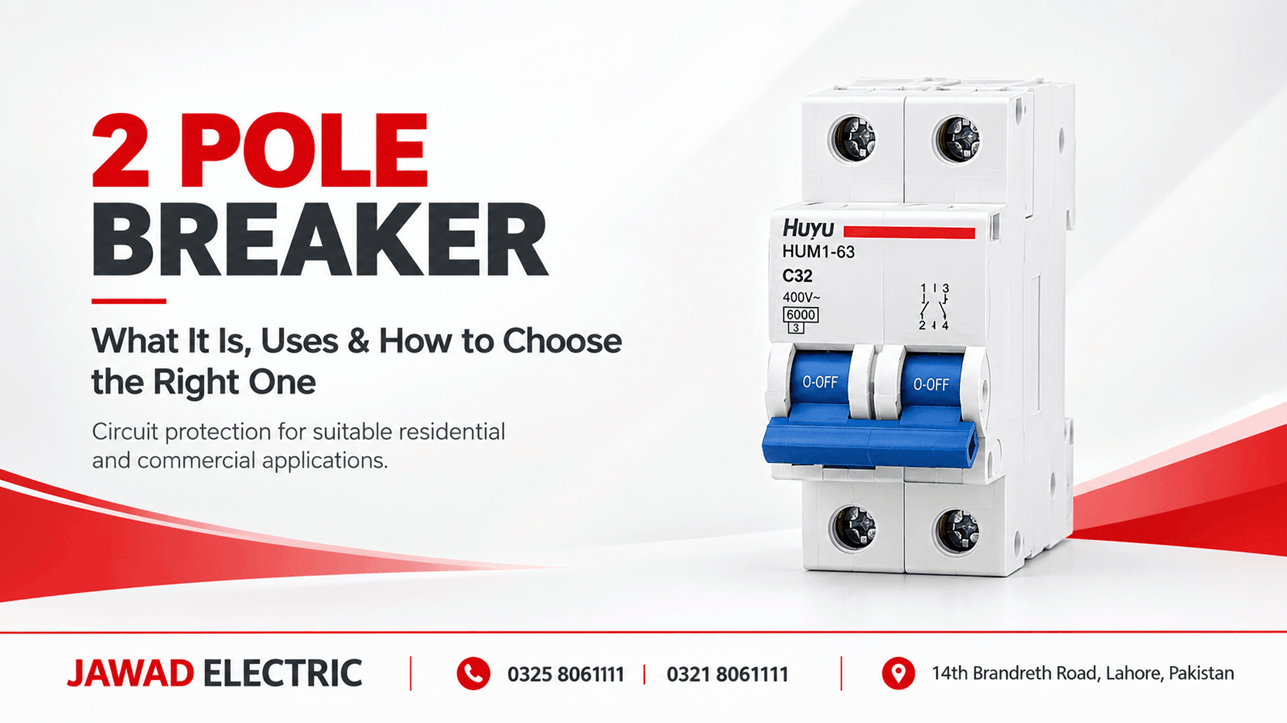
2 Pole Breaker (Two Pole / Double Pole Circuit Breaker) in Pakistan
A 2 pole breaker, also known as a double pole circuit breaker or 2P breaker, is used to disconnect two conductors simultaneously. In many single-phase electrical installations in Pakistan, it is used to isolate the phase and neutral supply to equipment or a distribution board, depending on the installation and breaker design.
Jawad Electric is an authorized distributor of Sigma Elektrik products in Pakistan. We supply electrical protection and switchgear products with official warranty support. Whether you need a breaker for a home, shop, office, or industrial application, selecting the correct rating is essential for safe and reliable operation.
Need help choosing a breaker? Contact Jawad Electric at 0325 8061111 or request a quote.
What Is a 2 Pole Breaker (Double Pole Circuit Breaker)?
A 2 pole breaker is an electrical protection device with two mechanically linked poles that operate together. Depending on its design, both poles may provide overcurrent protection, or the device may have a different protection arrangement specified by its manufacturer.
You may see this product described as a:
- 2 pole circuit breaker
- Double pole circuit breaker
- Two pole breaker
- 2P MCB
In a typical 230V single-phase application, a suitable two-pole breaker can disconnect both phase and neutral conductors. This helps isolate the circuit for maintenance when the installation is designed correctly.
Important: Always verify the manufacturer’s wiring diagram, pole configuration, and installation requirements before selecting a breaker.
How Does a 2 Pole Circuit Breaker Work?
A circuit breaker protects electrical circuits against specified fault conditions. Many miniature circuit breakers (MCBs) use thermal and magnetic tripping mechanisms.
Thermal protection against overloads
The thermal mechanism responds when current exceeds the breaker’s rated operating conditions for a sufficient period. It helps disconnect the circuit before prolonged overcurrent causes excessive heating.
Magnetic protection against short circuits
The magnetic mechanism responds rapidly to sufficiently high fault currents, helping disconnect the circuit during a short circuit.
Mechanically linked operation
In a two-pole breaker with a common operating mechanism, both poles operate together. If the device trips, the linked mechanism disconnects the poles according to its design.
Before resetting a tripped breaker, identify and resolve the underlying fault. Repeatedly resetting a breaker without investigating the cause can be dangerous.
2 Pole vs 1 Pole vs 1P+N vs 3 Pole vs 4 Pole
Different breaker configurations are designed for different electrical systems and applications.
| Breaker type | Typical configuration | Common applications |
|---|---|---|
| 1 Pole (1P) | One pole | Single-conductor protection in suitable circuits |
| 1P+N | Phase protection with a neutral switching pole in common designs | Single-phase circuits requiring a compact arrangement |
| 2 Pole (2P) | Two linked poles; protection depends on the device design | Single-phase isolation and suitable two-conductor circuits |
| 3 Pole (3P) | Three linked poles | Three-phase motors and machinery |
| 4 Pole (4P) | Four linked poles | Three-phase systems where neutral switching is required |
A 1P+N breaker and a 2P breaker are not automatically interchangeable. Their protection arrangements, terminal configurations, and manufacturer specifications may differ.
Likewise, two independent single-pole breakers are not necessarily equivalent to a purpose-built two-pole breaker. Use equipment specifically designed and approved for the intended circuit.
Internal link opportunity: Read our existing article, Differences Between MCB and MCCB Circuit Breakers, for more information about circuit breaker types and applications.
2 Pole Breaker Ratings and Applications
The correct current rating depends on the load, conductor size, installation method, ambient temperature, fault conditions, and applicable electrical standards. The following table provides general application examples, not a sizing recommendation.
| Common rating | Potential application |
|---|---|
| 10A | Suitable lighting or small dedicated circuits |
| 16A–20A | Certain socket circuits and small appliances |
| 32A | Some dedicated appliance circuits, subject to design requirements |
| 40A–50A | Suitable higher-current circuits or sub-distribution applications |
| 63A | Certain distribution-board incomers, subject to the installation design |
Do not select a breaker based on the appliance name or current rating alone. A qualified electrician should verify the cable’s current-carrying capacity, installation conditions, expected fault current, and the manufacturer’s requirements.
Sigma Elektrik offers circuit protection products in different current ratings, tripping curves, and breaking capacities. The precise specifications vary by product model.
Internal link opportunity: Link to the Sigma Electric page to help visitors explore the brand and its available products.
Where Is a Two Pole Breaker Used?
Depending on its rating and design, a two-pole breaker may be used in:
- Main or sub-distribution boards in homes, shops, and offices.
- Dedicated air-conditioning circuits.
- Electric geyser and water-pump circuits.
- UPS and inverter circuits where the device is suitable for the system.
- Solar and battery installations using appropriately rated DC protection equipment.
- Equipment that requires two-conductor isolation.
The correct device must be selected for the electrical system, the load, and the applicable installation requirements. Not every two-pole breaker is suitable for every application.
How to Choose the Right 2 Pole Breaker?
Selecting a breaker involves more than matching its ampere rating to the appliance.
1. Calculate the expected load
For a simple single-phase load, current can be estimated using:
Current (A) = Power (W) ÷ [Voltage (V) × Power factor]
For example, a 3,000W load at 230V with a power factor of 0.9 draws approximately 14.5A under those assumptions.
This calculation is only an initial estimate. Motor starting current, continuous operating conditions, manufacturer specifications, and installation requirements must also be considered.
2. Check the cable size
The breaker must provide appropriate protection for the conductors. Its rating must not exceed the allowable current capacity of the cable under the actual installation conditions, taking account of applicable design rules.
A larger breaker is not a safe solution to repeated tripping unless the cause has been investigated and the complete circuit has been assessed.
3. Select the appropriate tripping curve
MCBs commonly use different tripping characteristics, including B, C, and D curves.
- B curve: Often suitable for circuits with relatively low inrush current.
- C curve: Commonly used for general commercial and household circuits where moderate inrush current is expected.
- D curve: Intended for certain loads with high starting currents, subject to the available fault current and installation requirements.
The correct curve depends on the equipment and the electrical system. Do not change the curve simply to prevent nuisance tripping without checking the circuit design.
4. Verify the breaking capacity
Breaking capacity indicates the maximum prospective fault current a breaker is designed to interrupt under specified conditions.
Choose a breaker with a breaking capacity suitable for the prospective short-circuit current at the installation point. A qualified electrician should verify this requirement.
5. Confirm AC or DC compatibility
AC and DC breakers are not automatically interchangeable. DC circuits, including solar and battery systems, require protection equipment rated for the circuit’s DC voltage, current, and fault conditions.
Always check the product’s ratings, polarity requirements where applicable, and wiring diagram.
Common Mistakes to Avoid When Selecting a 2 Pole Breaker
Increasing the breaker rating without checking the cable
If a breaker keeps tripping, replacing it with a higher-rated model can expose the wiring to dangerous overheating. Investigate the load, wiring, connections, and breaker suitability first.
Choosing the wrong tripping characteristic
Motors, compressors, and pumps may draw high starting currents. The correct breaker must accommodate the intended operating conditions while still providing appropriate fault protection.
Ignoring loose or damaged connections
Loose terminals, damaged insulation, and overheated components can create fire and electric-shock hazards. Electrical inspection and repairs should be performed by a qualified electrician with the circuit safely isolated.
Confusing 1P+N with 2P
These configurations can have different protection arrangements. Check the product datasheet rather than relying on appearance alone.
Selecting a breaker only by price
A low price does not establish that a breaker is genuine or compliant. Verify the brand, product markings, technical documentation, and supplier’s warranty arrangements.
Using an AC breaker in a DC solar circuit
DC arcs can be difficult to extinguish. A breaker without suitable DC ratings may fail to interrupt a fault safely. Always use protection equipment rated for the specific DC application.
AC vs DC 2 Pole Breakers for Solar and Battery Systems
Alternating current passes through zero periodically, which helps an AC breaker extinguish an electrical arc under its intended operating conditions. Direct current does not have the same periodic zero crossings, so interrupting DC current can present different challenges.
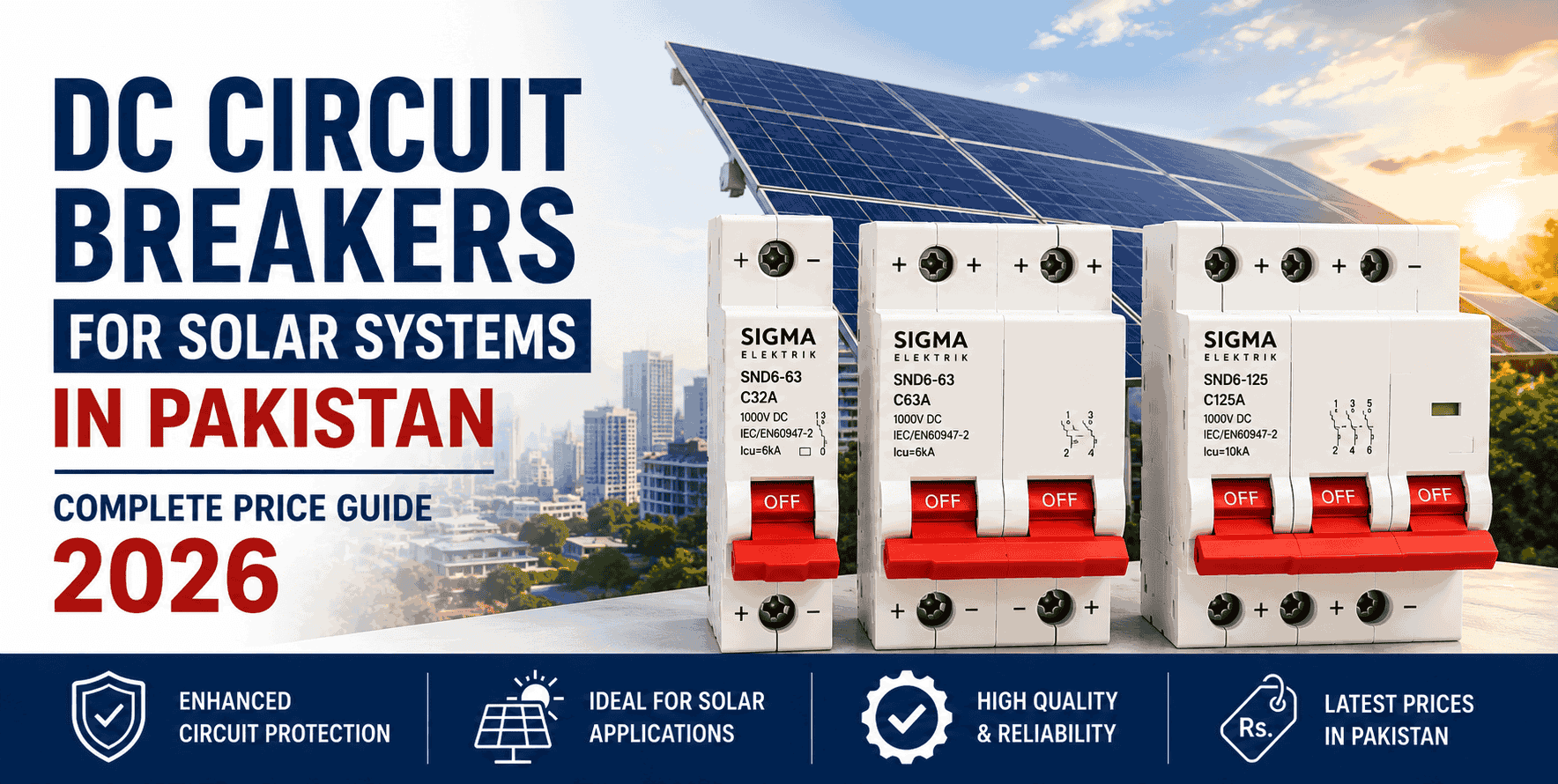
For solar panels and battery systems, choose a breaker specifically rated for the system’s DC voltage and current. Follow the manufacturer’s instructions for polarity, terminal connections, and installation.
Do not assume that an AC-rated breaker can safely interrupt a DC fault just because its current rating appears sufficient.
Internal link opportunity: Link to our existing article, DC Circuit Breakers for Solar Systems in Pakistan – Complete Price Guide 2026.
2 Pole Breaker Price in Pakistan
The price of a two-pole breaker in Pakistan depends on several factors:
- Brand and authenticity: Genuine products with verifiable specifications and warranty support may cost more than unverified alternatives.
- Current rating: Different ampere ratings have different prices.
- Breaking capacity: Higher fault-interruption ratings can affect the cost.
- Product type: MCBs, MCCBs, and DC-rated breakers serve different purposes and have different specifications.
- Quantity and availability: Bulk orders and current stock can affect the quotation.
Prices can change with stock availability, specifications, and market conditions. Contact Jawad Electric for current pricing, product availability, and bulk quotations.
Why Buy from Jawad Electric?
Jawad Electric supplies Sigma Elektrik products and electrical switchgear for residential, commercial, and industrial applications.
Customers can contact our team for:
- Sigma Elektrik product enquiries and warranty information.
- Assistance identifying suitable breaker specifications.
- Availability and quotations for individual or bulk orders.
- Support with product selection based on the application.
- A range of electrical protection and switching equipment.
Our product range includes MCBs, MCCBs, RCCBs, ELCBs, contactors, automatic transfer switches, and relays, subject to availability.
Internal link opportunities:
- Sigma Electric — brand information.
- Contact — enquiries and quotations.
- Differences Between MCB and MCCB Circuit Breakers — product comparison.
- Common RCCB Problems and Solutions: A Complete Troubleshooting Guide (2026) — residual-current protection and troubleshooting.
- Automatic Transfer Switch: Price, Types, Wiring & Buying Guide — transfer-switch information.
Frequently Asked Questions
Is a 2 pole breaker the same as a double pole circuit breaker?
Yes. The terms generally refer to a circuit breaker with two linked poles. However, protection arrangements and product specifications vary, so always check the manufacturer’s documentation.
Can I use a 2 pole breaker on a single-phase supply?
Yes, where the breaker is correctly rated and suitable for the installation. A two-pole device is commonly used to disconnect phase and neutral in suitable single-phase circuits.
Is a 2 pole breaker the same as a 1P+N breaker?
Not necessarily. A common 1P+N design provides overcurrent protection on the phase and switches the neutral, while a 2P design may provide protection on both poles. Confirm the exact configuration from the datasheet.
Which 2 pole breaker do I need for a 1.5-ton or 2-ton AC?
The required breaker depends on the air conditioner’s nameplate specifications, rated current, starting characteristics, cable size, and installation conditions. Have a qualified electrician assess the circuit rather than selecting a breaker based only on the AC’s tonnage.
Does a 2 pole MCB protect against electric shock?
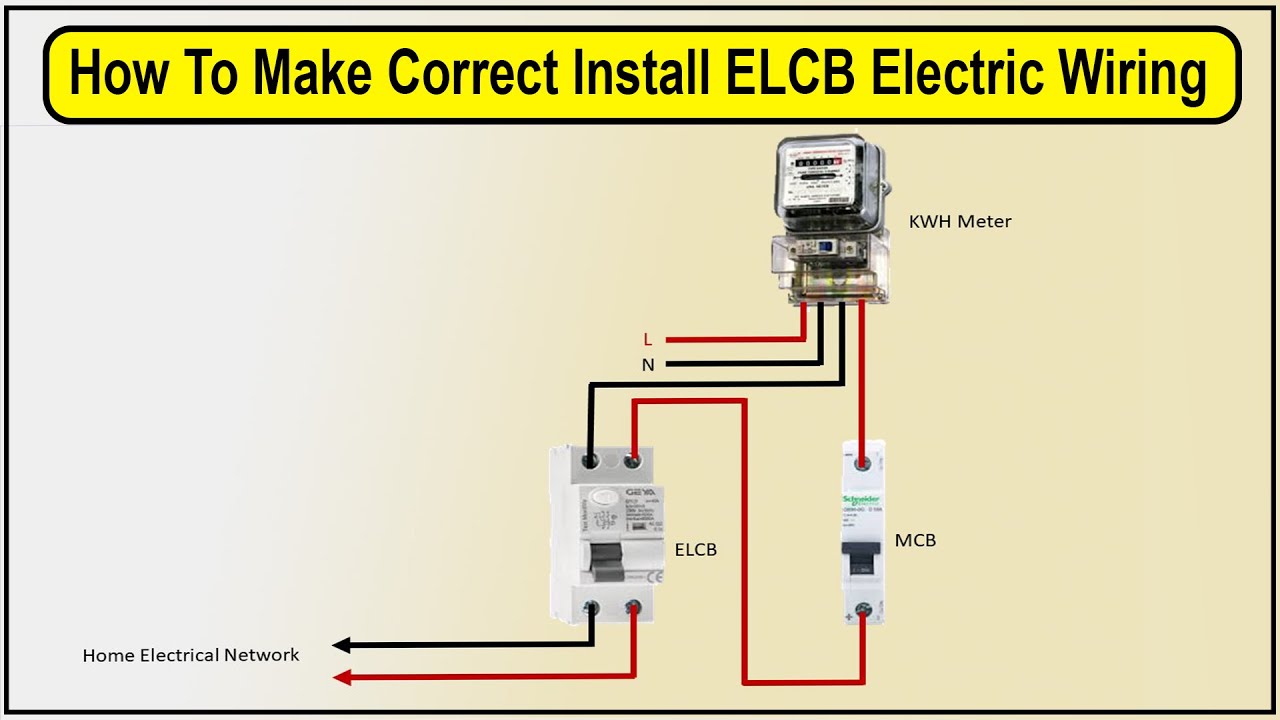
An ordinary MCB protects against specified overload and short-circuit conditions. It does not replace residual-current protection. An appropriately selected RCCB or RCBO may be required for additional protection against earth-leakage currents, according to the installation design and applicable standards.
Internal link opportunity: Common RCCB Problems and Solutions: A Complete Troubleshooting Guide (2026).
Why does my 2 pole breaker keep tripping?
Possible causes include an overloaded circuit, a short circuit, faulty equipment, loose connections, or an unsuitable breaker characteristic. Do not repeatedly reset a breaker that continues to trip. Stop using the affected circuit and arrange an inspection by a qualified electrician.
Can a 2 pole breaker be used for solar panels?
Only if the breaker is specifically rated and suitable for the DC voltage, current, and fault conditions of the solar installation. An ordinary AC breaker should not be assumed suitable for DC use.
Internal link opportunity: DC Circuit Breakers for Solar Systems in Pakistan – Complete Price Guide 2026.
Are Sigma Elektrik breakers supplied by Jawad Electric genuine and covered by warranty?
Jawad Electric identifies itself as an authorized Sigma Elektrik distributor in Pakistan. Contact the company to confirm the warranty terms, documentation, and availability for the specific model you intend to purchase.
Does Jawad Electric deliver outside Lahore?
Contact Jawad Electric to confirm delivery availability, current stock, and dispatch arrangements for your city.
Get a Quote for a 2 Pole Breaker
Looking for a 2 pole breaker in Pakistan? Share the required current rating, quantity, application, and any available product specifications with our team. We can help you check product availability and obtain a quotation.
Jawad Electric
Shop No. 1, 14th Brandreth Road, Lahore, Pakistan.
Call: 0325 8061111 | 0321 8061111
Website: Jawad Electric — Contact Us
For technical selection or installation, consult a qualified electrician and follow the manufacturer’s instructions and applicable electrical standards.

Related Posts
This Post Has 0 Comments