
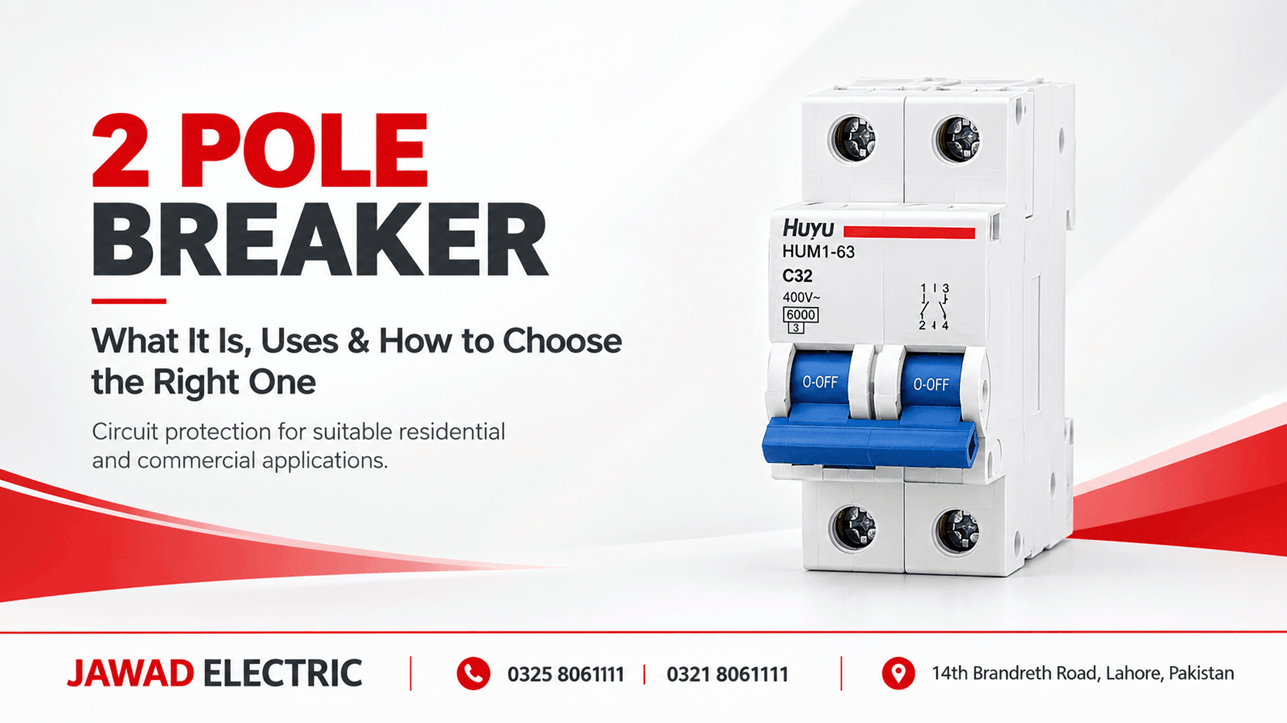
A 2 pole breaker, also known as a double pole circuit…
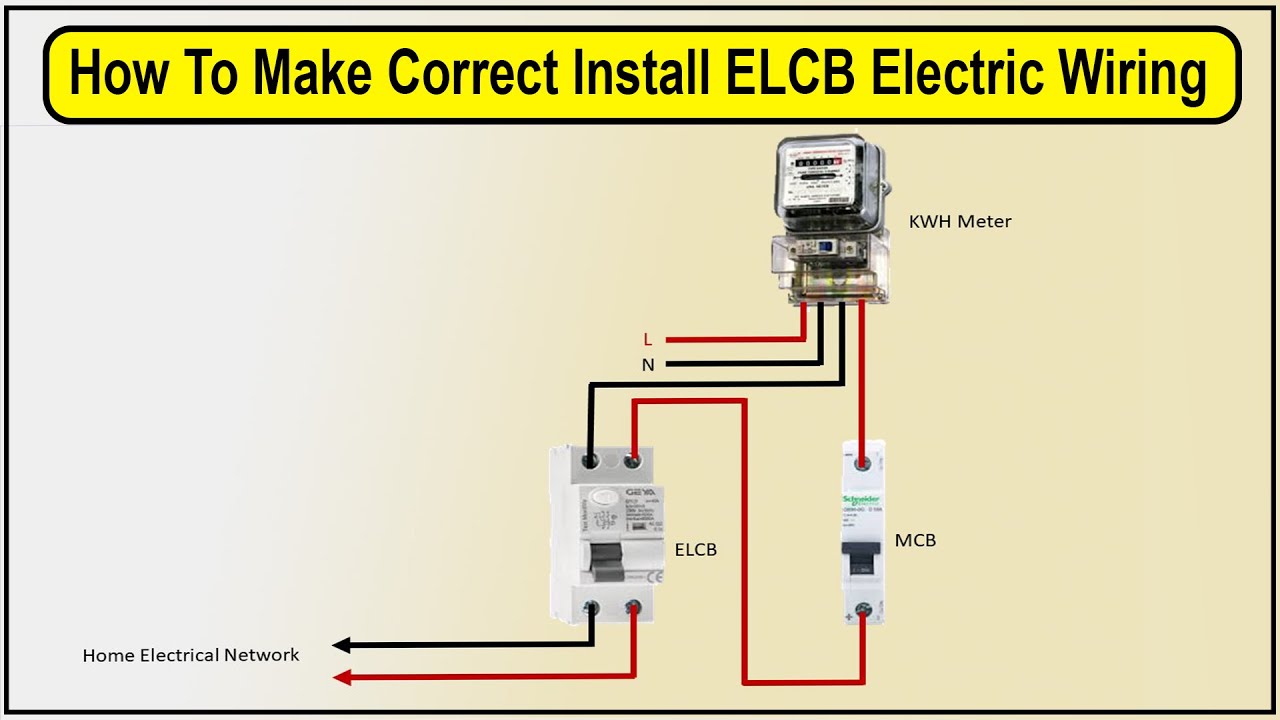
How to Install a Single Phase Earth Leakage Circuit Breaker (ELCB) at Home?
A wet hand on a geyser switch. A washing machine with worn wire insulation. A water pump operating during the monsoon season This is how most electric shocks in our homes start, and your normal MCB will not notice any of it.
An earth leakage circuit breaker will. In this guide we explain what an earth leakage circuit breaker is, how it works, how to connect it and how to install a single phase earth leakage circuit breaker in your distribution board. We also cover how to pick the right rating, common mistakes and what to do when it keeps tripping.
What Is an Earth Leakage Circuit Breaker?
It is a safety switch that turns the power off the moment some current escapes to earth instead of returning through the neutral wire. That escaping current could be flowing through a damaged cable, a damp wall or, in the worst case, a person.
A normal MCB only reacts to a big overload or a short circuit. A person can be in real danger from a current far smaller than what an MCB ever notices. That small gap is exactly what an ELCB is built to close.
The word ELCB is used loosely in Pakistan. Shops and electricians use it for two different devices:
- Voltage-operated ELCB: the old design. It watches for voltage on the earth wire. You will hardly find it in new work.
- Current-operated ELCB (RCCB / RCD): the one you should buy. It compares the current in live and neutral and trips on any difference.
When you buy for a house, ask for the current-operated type. Our RCCB range covers it.
How Does an Earth Leakage Circuit Breaker Work?
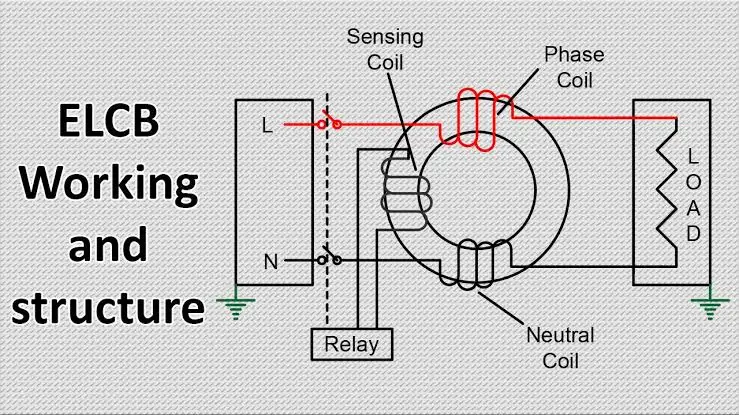
Think of it as a scale that constantly weighs two things: current going out on the live wire and current coming back on the neutral. In a healthy circuit, they are equal.
Now imagine a faulty geyser. Some current goes into the metal body and away to earth, so less returns on the neutral. The ELCB feels that gap through a small sensing coil (a core that both wires pass through) and trips. The whole thing takes a fraction of a second.
In short:
- Live and neutral pass through the sensing core. When all current returns normally, the magnetic effects cancel out.
- A leak upsets the balance. Less current returns, so the core senses the difference (called residual current).
- The trip mechanism releases.
The contacts separate, interrupting the flow of electricity.
The trip limit is called sensitivity:
- 30 mA: protects people. This option is commonly selected for residential use.
- 100 mA to 300 mA: mainly for fire protection and larger installations, not for personal safety.
Signs You Need an ELCB
Many houses in Pakistan were wired years ago, before people thought about leakage protection. If any of these sound familiar, it is time to add one:
- You feel a light tingle when you touch a tap, a fridge door or a metal appliance body
- Your house has no ELCB or RCCB in the board at all
- Wiring is old, patched or has cracked insulation
- Bathrooms, kitchen and outdoor sockets sit on plain MCB circuits
- You run a geyser, water pump or motor in a damp area
A tingle is a warning, not a small thing. Do not ignore it.
Types of ELCB and Where Each One Is Used
You will see a few different versions in the market. Here is how to sort them out.
- 2 pole (single phase): switches live and neutral. This is the one for homes, flats and small shops, and it is the type this guide installs.
- 4 pole (three phase): for three phase supply in workshops, factories and larger buildings.
- ELCB built into a breaker: larger frame breakers that combine overload, short circuit and earth leakage protection in one unit. Jawad Electric supplies these from 40A to 630A.
There is also the type of leakage the device can sense. Type AC detects normal alternating leakage. Type A also detects pulsating DC leakage, which appears with inverter-driven appliances and electronic loads. If your house has inverter ACs, inverter washing machines or solar equipment, ask your supplier whether Type A is the better fit.
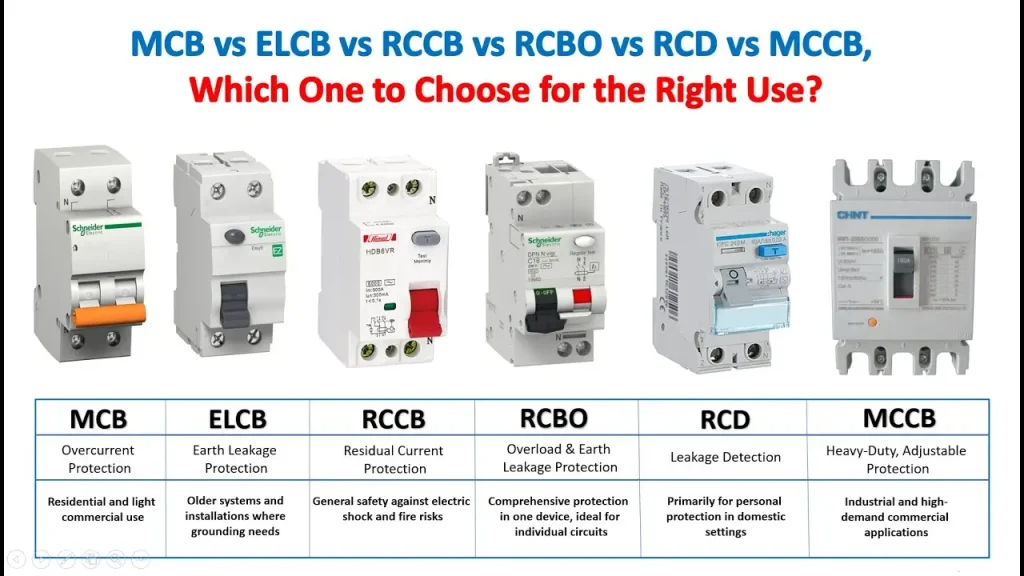
ELCB vs RCCB vs RCBO vs MCB
These names get mixed up a lot, so here is a quick comparison.
| Device | Protects against | Overload / short circuit? | Best used |
| MCB | Overload, short circuit | Yes | Every circuit in the board |
| ELCB / RCCB | Earth leakage, electric shock | No | Main incomer or a group of circuits |
| RCBO | Leakage, overload and short circuit | Yes | One important circuit, for example a geyser or AC |
| ELCB built into MCCB | Leakage, overload and short circuit | Yes | Industrial and commercial panels |
The important thing to remember: an ELCB or RCCB does not replace the MCB. They work as a pair.
How to Choose the Right Rating
Getting the rating wrong is the most common reason people are unhappy with a new ELCB. Check these four points:
- Current rating (A): it should be equal to or higher than the MCB feeding it. For example, if your incoming MCB is 32A, choose a 32A or 40A ELCB.
- Sensitivity (mA): 30 mA for homes, shops and anywhere people touch the equipment.
- Poles: 2 pole for single phase, 4 pole for three phase.
- Standard: look for IEC marking on the device and a supplier who can show you the datasheet.
Not sure about your load? Give us the main MCB rating and the list of big appliances and we will tell you what fits.
Which Appliances Need ELCB Protection?
Ideally the whole house sits behind an ELCB. If you are protecting circuit by circuit, start with places where water and electricity meet:
- Geyser: heating elements wear out and leak. This is the most common risk in a home.
- Water pump and motor: used in wet conditions, often outdoors
- Washing machine and dryer: water, vibration and long cables
- Kitchen sockets: kettles, ovens, microwaves and wet hands
- Bathroom and outdoor lights and sockets
- Air conditioners and coolers: especially desert coolers, which are full of water
Old refrigerators and freezers sometimes have a small natural leakage and can cause nuisance tripping. If that happens, give them their own protected circuit rather than removing the ELCB.
Check Your Earthing First
An ELCB works best when the house has a proper earth. Before you install, look at these:
- Is there an earth wire at every socket, and is it actually connected to the earth bar?
- Is the earth rod or earthing pit in good condition and not corroded or dried out?
- Are geyser, washing machine and metal appliance bodies connected to earth?
The little tester lamps sold for sockets only give a rough idea. If you are not sure, ask an electrician to measure the earth resistance. A low reading is what you want. Earth pits also need water added from time to time so they stay effective, especially in dry weather.
Tools and Safety Before You Start
Only do this if you are comfortable working inside a distribution board. If not, call a qualified electrician, because the labour cost is small compared to the risk.
You will need:
- A single phase (2 pole) ELCB / RCCB with the right rating
- An insulated screwdriver, wire stripper and a voltage tester
- Cable of the right size for your load
- A working earth connection. Check this before anything else.
Switch off the main supply and test the board with the tester. Do not trust the switch alone.
How to Connect an Earth Leakage Circuit Breaker?
Wiring is simpler than it looks. A 2 pole ELCB has an input side and an output side:
- Top (input): incoming live and incoming neutral
- Bottom (output): outgoing live and outgoing neutral, going to your branch MCBs or load
- Earth: does not pass through the ELCB. It goes directly to the earth bar.
Models differ a little, so follow the wiring diagram printed on the device itself.
Where should it sit in the board?
Two common layouts:
- Whole house protection: main MCB, then ELCB, then all branch MCBs. Simple and covers everything, but one leak switches off the whole house.
- Split protection: one ELCB for the risky circuits (bathroom, kitchen, geyser, outdoor sockets) and another for lights and the rest. When one trips, you do not lose everything.
How to Install a Single Phase Earth Leakage Circuit Breaker: Step by Step
- Switch off the main supply and confirm the board is dead with your tester.
- Fix the ELCB on the DIN rail, right after the main MCB.
- Connect the incoming live and neutral to the top terminals. Tighten the screws well, because loose terminals cause heat and false trips.
- Connect the outgoing live and neutral to the bottom terminals and carry them to your branch MCBs.
- Check your neutrals. Every circuit behind this ELCB must return its neutral through this ELCB only. A neutral shared with another circuit is the number one reason for random tripping.
- Connect the earth wire to the earth bar.
- Close the board and switch on the supply, then the ELCB.
- Press the TEST button. It must trip at once. If it does not, switch off and get it checked.
Three Phase (4 Pole) ELCB Connection
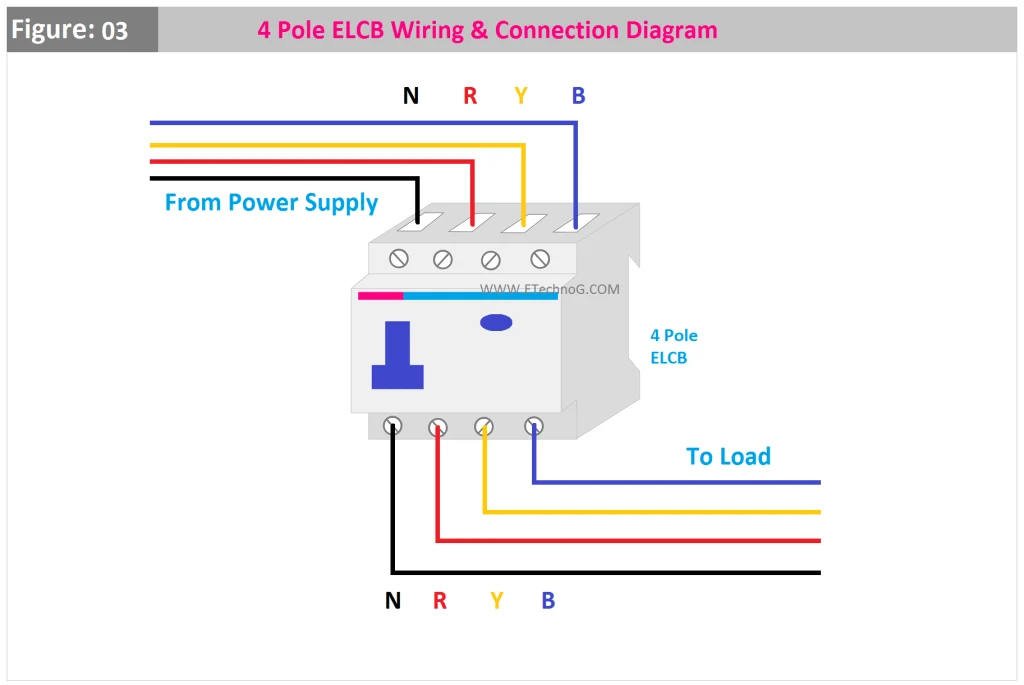
This guide is about single phase, but many readers run workshops or shops on three phase supply, so here is the short version. A 4 pole unit switches all three phases and the neutral:
- Input (top): L1, L2, L3 and neutral from the supply or main breaker
- Output (bottom): L1, L2, L3 and neutral to your load or sub-distribution
- Earth: straight to the earth bar, as before
The rules do not change: neutral only through this device, good earth, TEST button every month. For panels and industrial loads, our 4 pole earth leakage circuit breaker range is the better fit.
Testing and Maintenance
An ELCB you never test is just a hope. A few simple habits keep it reliable:
- Press the TEST button once a month. It should trip immediately. Then switch it back on.
- Check terminals for loose screws or discolouration once a year. Discolouration means heat.
- Keep the board dry and dust free, especially in the monsoon.
- If the TEST button does not trip it, replace the device. Do not keep using it.
- After a real trip, find the cause first. Do not keep switching it back on again and again.
Why Does My ELCB Keep Tripping?
A tripping ELCB is doing its job, so do not bypass it. Check these first:
- An appliance with a leak, usually a geyser element, iron, washing machine or water pump. Unplug things one by one to find it.
- Damp outdoor or bathroom wiring, especially in the monsoon
- A shared neutral, as explained in step 5
- A UPS, inverter or generator changeover that connects the neutral in the wrong place
- Old cables with cracked insulation
- Too many appliances with small leakage adding up on one ELCB. Splitting the load across two ELCBs often fixes this.
If it trips with nothing connected, the ELCB itself or the wiring behind it needs an electrician.
Common Mistakes to Avoid
- Sharing the neutral between two ELCBs or with circuits outside the ELCB
- Skipping the earth connection
- Choosing an ELCB with a lower rating than the MCB feeding it
- Using a 300 mA device where people need protection
- Bypassing or taping down a tripping ELCB
- Buying the cheapest unbranded unit with no datasheet or standard marking
Standards and Quality: What to Look For
Because an ELCB is a life-safety device, the cheapest unit is not the smart choice. Look for:
- IEC standard marking: RCCBs are made to IEC 61008, RCBOs to IEC 61009, and circuit breakers with built-in leakage protection to IEC 60947-2.
- Clear rating print: ampere, sensitivity in mA, voltage and poles printed on the front
- A working TEST button you can press in the shop
- A supplier who can show a datasheet and stands behind the product
- Solid terminals and a firm switch feel. Flimsy plastic and loose screws are bad signs.
Fake and unmarked breakers do exist in the market, so buy from an established dealer.
Which ELCB Should You Buy?
For a house or shop, a 2 pole, 30 mA unit with a rating that matches your main MCB is the usual choice. Factories and heavy loads use 4 pole units. Jawad Electric supplies ELCB breakers from 40A to 630A with built-in leakage protection, made to IEC/EN 60947-2. Details are on our earth leakage circuit breaker page.
Looking for the earth breaker price in Pakistan? It depends on brand, poles, ampere rating and sensitivity, so a fixed number would mislead you. For today’s earth leakage circuit breaker price in Pakistan, call or WhatsApp 0325 8061111.
Frequently Asked Questions
Is ELCB the same as RCCB?
In shops, people use both names for the same shock-protection switch. Strictly, ELCB is the older voltage-operated design and RCCB is the modern current-operated one.
Can I install an ELCB without earthing?A current-operated device can still trip on leakage, but good earthing makes the protection dependable. Fix the earth first.
Is an ELCB enough without an MCB?
No. It does not protect against overload or short circuit. Use both together.
Can I install a single phase ELCB myself?
If you understand your board and can isolate the supply safely, yes. If you are unsure about the neutral or the earth, hire a qualified electrician.
Which sensitivity is right for a home?
30 mA. Higher values like 100 or 300 mA are mainly for fire protection and are not meant to protect people.
Where should the ELCB be placed in the board?
After the incoming supply and main MCB, and before the circuits it protects.
How often should I test it?
Once a month with the TEST button.
How fast does an ELCB trip?
A good current-operated unit trips within a fraction of a second once leakage crosses its rated limit. That speed is what makes it protective.
Can I use an ELCB outdoors?
Fit it inside a weatherproof enclosure with a suitable IP rating. Do not leave the board or the device exposed to rain.
Will an ELCB reduce my electricity bill?
No. It does not save power. It protects people and helps prevent electrical fires.
Do I need one ELCB for the whole house or one per circuit?
One for the whole house is the minimum. Two or more, split by area, is better because a fault in one place does not shut everything down.
What is the price of an earth leakage circuit breaker in Pakistan?
It changes with type and rating. Contact Jawad Electric for a current quote.
Need Help Choosing?
Related: Miniature Circuit Breakers (MCB) | Residual Current Circuit Breakers (RCCB)

Related Posts

This Post Has 0 Comments