
The adoption of solar energy in Pakistan is growing faster than…
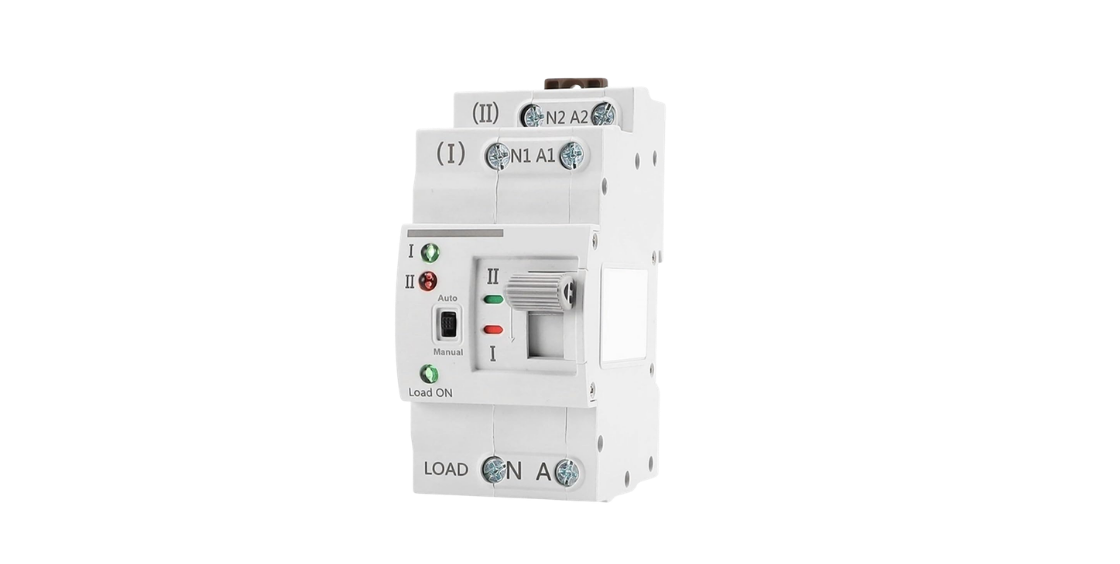
Automatic Transfer Switch: Price, Types, Wiring & Buying Guide
An automatic transfer switch is an electrical device that keeps your power supply running by switching your load between two power sources – usually your main utility grid and a backup generator or inverter – without any manual intervention. The moment the primary source fails, the ATS panel detects the loss of voltage or frequency and shifts your connected load to the backup source within seconds, then switches back once normal power is restored. Jawad Electric supplies and installs automatic transfer switches, auto-changeover switches, and ATS panels for homes, offices, and industrial facilities across Pakistan.
What is an Automatic Changeover Switch?
An Auto Changeover Switch (also known as an Automatic Switch or Automatic Changeover Relay) is the local term commonly used for an ATS. It performs a single function: continuously monitoring the incoming power supply and automatically routing your load to a backup source whenever an outage is detected — no manual switching required. In Pakistan, this device is also known simply as a transfer switch, and the panel itself is sometimes called an ATS switch.
This is different from a traditional manual transfer switch, where one has to physically flip a lever or press a button to transfer the load between sources. An automatic transfer switch removes this step entirely, which is most important when no one is on site to react to an outage, or when even a short delay could damage sensitive equipment.
How does an automatic transfer switch work?
The principle of how an automatic transfer switch works is straightforward, although the internal electronics are sophisticated. This is also the most common way people search online — how an automatic transfer switch works:
- Monitoring — The ATS controller continuously monitors the voltage and frequency on the primary (utility) source.
- Fault detection — When the primary source drops out of acceptable limits or fails completely, the controller registers it as an outage.
- Backup start signal — The ATS sends a start command to the generator, or activates the connected inverter/UPS.
- Load transfer — Once the backup source stabilizes, the switching mechanism transfers the load from the primary to the backup source.
- Retransfer — When utility power returns and stabilizes, the ATS automatically switches the load back to the primary source and (if applicable) signals the generator to shut down.
This entire cycle typically takes only a few seconds — much faster than any manual changeover switch. This is sometimes referred to as ATS automatic transfer switch cycling in technical documentation.
ATS Configurations – What sources can it switch between?
Depending on your setup, an automatic transfer switch can be configured for:
- Utility + Generator – The most common setup for homes, offices, and standby generator systems
- Utility + Utility (dual feed) – Used where two independent grid connections provide redundancy
- Generator + Generator – Common in remote or off-grid sites that run on generators around the clock
- Utility + Generator + Generator – Used in critical facilities that require backup for backup
- Power Inverter Automatic Transfer Switch – Integrates with a UPS/inverter instead of, or in addition to, a generator
Open vs. Closed Transfer.
Open Transition (Break-for-Make): The ATS disconnects from one source before connecting to the other. This is the standard, more economical setup for most homes and businesses.
Closed Transition (Make-before-Break): The ATS briefly connects to both sources before disconnecting to the first, providing continuous, uninterrupted power. It is used where even a momentary difference in power is unacceptable—hospitals, data centers, and sensitive production lines.
Types of Switching Mechanisms
- Contactor Type – The most common and cost-effective mechanism for residential and light commercial ATS panels
- Molded Case Type – A simple, rugged mechanism suitable for a wide range of standard loads
- Power Frame Type – Designed for large industrial loads, handling much higher amperage than contactor or molded case switches.
Automatic Transfer Switches by Amperage and Phase
- Single Phase Automatic Transfer Switch – Standard choice for homes and small offices
- 3 Phase Automatic Transfer Switch – Used for commercial buildings, factories and large three-phase loads
- 200 Amp Automatic Transfer Switch and High Capacity ATS Panels – For large residential services and commercial/industrial installations
- 125VDC Automatic Transfer Switch — For specialized DC control and backup applications
Automatic Transfer Switches by Amperage and Phase
- Single Phase Automatic Transfer Switch – Standard choice for homes and small offices
- 3 Phase Automatic Transfer Switch – Used for commercial buildings, factories and large three-phase loads
- 200 Amp Automatic Transfer Switch and High Capacity ATS Panels – For large residential services and commercial/industrial installations
- 125VDC Automatic Transfer Switch — For specialized DC control and backup applications
Popular ATS Brands We Work With
We supply and can source ATS panels from all major automatic transfer switch manufacturers, including:
- ASCO Automatic Transfer Switch
- Generic Automatic Transfer Switch
- APC Automatic Transfer Switch
- Schneider Automatic Transfer Switch (Schneider Electric)
Each brand varies slightly in controller features, transfer type, and wall options.
We help you make the right choice for your load and budget.
Automatic Transfer Switch Wiring and Circuit Diagrams
Correct wiring is critical for both safety and code compliance. Every ATS installation we handle includes:
- An automatic transfer switch circuit diagram tailored to your specific setup, along with a larger automatic transfer switch diagram that covers the entire panel layout.
- A complete automatic transfer switch wiring diagram (automatic transfer switch wiring diagram pdf copy provided for your records)
- A dedicated single phase automatic transfer switch wiring diagram for residential setups, and generator automatic transfer switch wiring diagram for installations paired with a standby generator
- Safe interconnection between your utility feed, generator or inverter and ATS panel
- Testing and commissioning to verify correct automatic changeover operation before referral
Because incorrect automatic transfer switch wiring can cause backfeed into the grid — a serious safety hazard — installation should always be done by a qualified electrician.
Where are automatic transfer switches used?
- Residential – Backing up a home with a generator or inverter, keeping essential circuits running during load shedding or outages
- Commercial – Offices, retail, and small industrial units need reliable backup power.
- Critical facilities — hospitals, data centers, and telecom sites where even a short power outage is costly or dangerous.
- Industrial — Factories and plants that run on generator-backed or dual-utility power distribution
Automatic Transfer Switch vs. UPS - What's the Difference?
People often confuse ATS with UPS, but they solve different problems. A UPS (uninterruptible power supply) uses an internal battery to instantly power your equipment during a power outage — it has zero downtime because the battery is always alive. An automatic transfer switch, on the other hand, doesn’t store power itself. It switches your load between two external sources (such as the utility and the generator) and takes a few seconds to complete the transfer. Many facilities use both together: a UPS bridges the gap in the event of a power failure, while an ATS brings the generator online to maintain power for hours, not just minutes.
ATS Maintenance and Testing – Everything you need to know
The circuit breaker is designed for years of reliable operation, but requires periodic testing to avoid malfunctions.
- Monthly visual inspection-check for unsaturated loose connections, overheating, or corrosion on the terms.
- Quarterly Test Transfers – Create a power failure pattern to verify that the ATS switch switches and re-transfers correctly
- Annual Professional Servicing – A qualified electrician should inspect the contacts, tighten the connections, and verify the controller settings
- Battery/Control Power Check – Many ATS controllers rely on a small backup battery for the control logic. Replace it before it fails.
- Generator Coordination Test – Verify that the ATS start signal and generator response are still properly synchronised, especially after any generator servicing
Neglected maintenance is one of the most common reasons an automatic transfer switch fails to transfer during a true outage.
Signals the need to replace or upgrade your automatic transfer switch.
- Delay or failure during switching – if switching takes longer than usual, the internal connections may wear out.
- Heavy load-when adding more appliances or expanding the room or building , the current rated current (for example, for an old device with a reduced voltage) may not be sufficient.
- Repeated Trouble Transfers – Switching to backup power even when the utility supply is fine usually indicates a faulty sensing/controller unit.
- Outdated Single Source Design – Older ATS panels designed for a generator may not support new setups such as dual utility or inverter integration.
- Visible signs of wear or burn – Burnt, pitted, or unusual noise from the switching mechanism are safety red flags and mean immediate replacement is needed.
Automatic Transfer Switch Price in Pakistan
The automatic transfer switch price in Pakistan typically ranges from PKR 5,000 to Rs. 16,500. The prices depend on several factors:
- Amperage/Load Capacity – A small residential auto switch costs much less than a 200 amp automatic transfer switch or a large industrial ATS panel.
- Phase Type – Single Phase vs. 3 Phase Automatic Transfer Switch
- Brand — Locally assembled ATS panels are typically cheaper than imported ASCO, Generac, APC, or Schneider units.
- Transition Type — Open transition ATS panels typically cost less than closed transition units.
- Features — A Smart ATS with Remote Monitoring vs. Basic Automatic Transfer Relay
Whether you are looking for changeover switch price in Pakistan, auto changeover switch price in Pakistan, or automatic changeover switch price in Pakistan, the answer depends on the same factors — amperage, phase, brand, and features. The right automatic transfer switch for generator price in Pakistan, or generator automatic transfer switch price
Quote matched to your exact load, contact us with your requirements for a free consultation.
Get in touch
Whether you need a single phase ATS for your home or a heavy duty 3 phase automatic transfer switch for your facility, Jawad Electric will help you choose the right solution at the right price. Contact us today for a free consultation and accurate automatic transfer switch price quote.
Frequently Asked Questions
What is the difference between a transfer switch and an automatic transfer switch?
Manual transfer on a switch requires a person to physically transfer the load during an outage. An automatic transfer switch detects the outage and does it automatically, without any manual steps.
What is the price of an automatic transfer switch in Pakistan?
It depends on the amperage, phase type, brand and features. Share your load details with us and we’ll provide an accurate quote — whether you need pricing for an ATS panel, ATS switch, or a full automatic transfer switch setup.
How does the automatic transfer switch with the generator work?
ATS detects when utility power fails, sends a start signal to the generator, waits for it to stabilize, then transmits a load to it. When the utility power returns, it turns the load back on and prompts the generator to turn off.
Is a wiring diagram provided with the ATS panel?
Yes — We provide a complete automatic transfer switch wiring diagram with circuit diagram for each installation.
What is the difference between open and closed transfer ATS?
Open transfer briefly disconnects power during the transfer. Closed transfer overlaps both sources for truly uninterrupted transfer. Closed transfer is used where any power gap is unacceptable.
What ATS brands do you supply?
We can supply and deliver ASCO automatic transfer switches, Generic automatic transfer switches, APC automatic transfer switches, Schneider automatic transfer switches, and locally assembled ATS panels to match your load and budget.
Can an ATS be used with an inverter instead of a generator?
Yes — The power inverter automatic transfer switch configuration allows the ATS to switch between utility power and your inverter/UPS system.
Do you provide high capacity ATS panels for industrial use?
Yes, including 200 amp automatic transfer switch units and larger power frame type units for industrial and commercial loads.
How long does it take to install an ATS?
The standard installation of residential buildings usually takes several hours. Commercial and industrial plants depend on the load and existing wires, and we will inform you of the exact time after the evaluation of the facility.

Related Posts
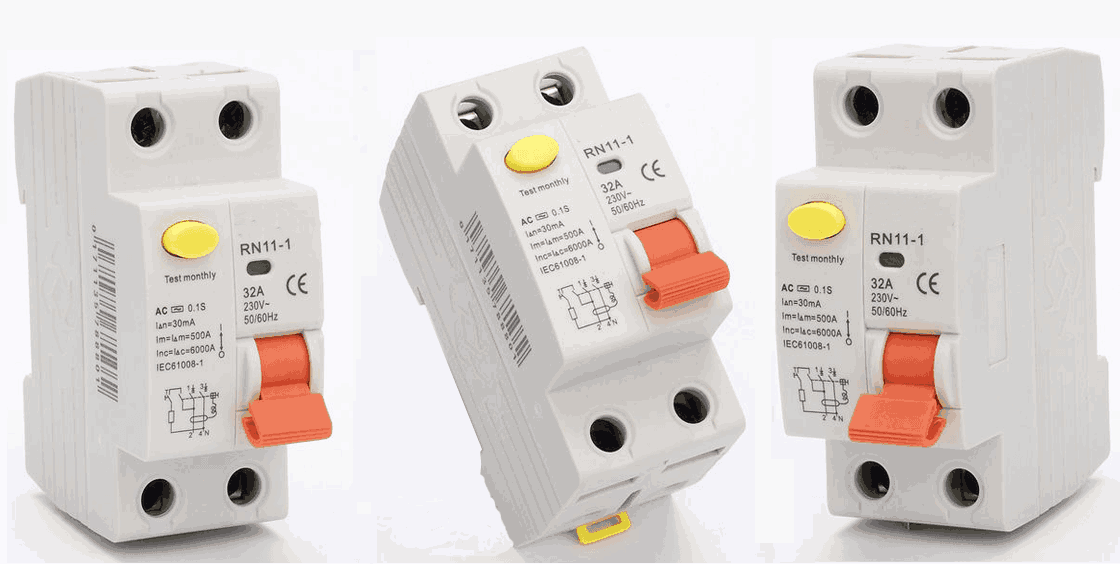
An RCCB breaker is one of the most important safety devices in…
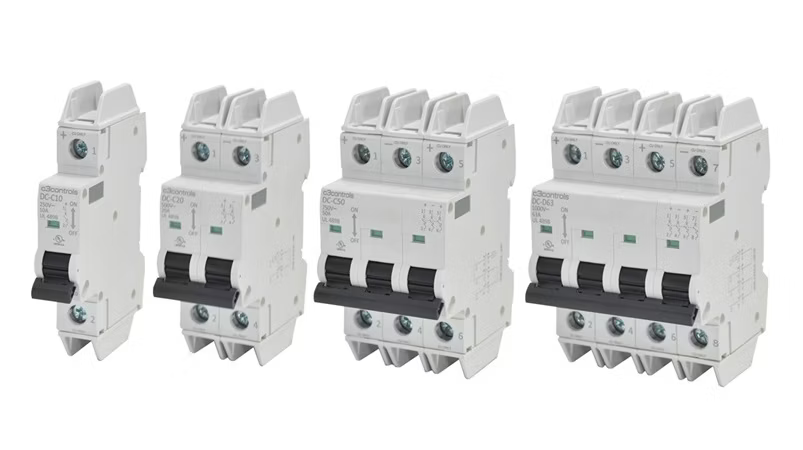
MCB vs. MCCB Circuit Breakers: Which One is Better? When working…
This Post Has 0 Comments