
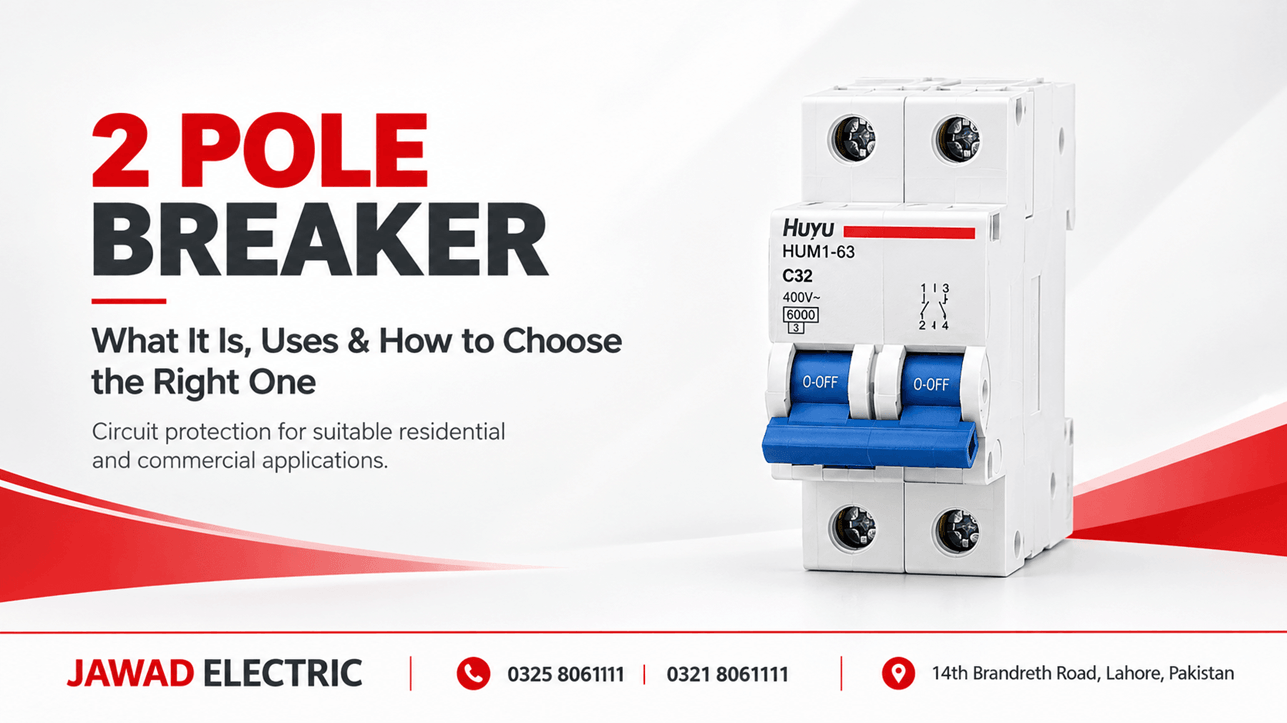
A 2 pole breaker, also known as a double pole circuit…
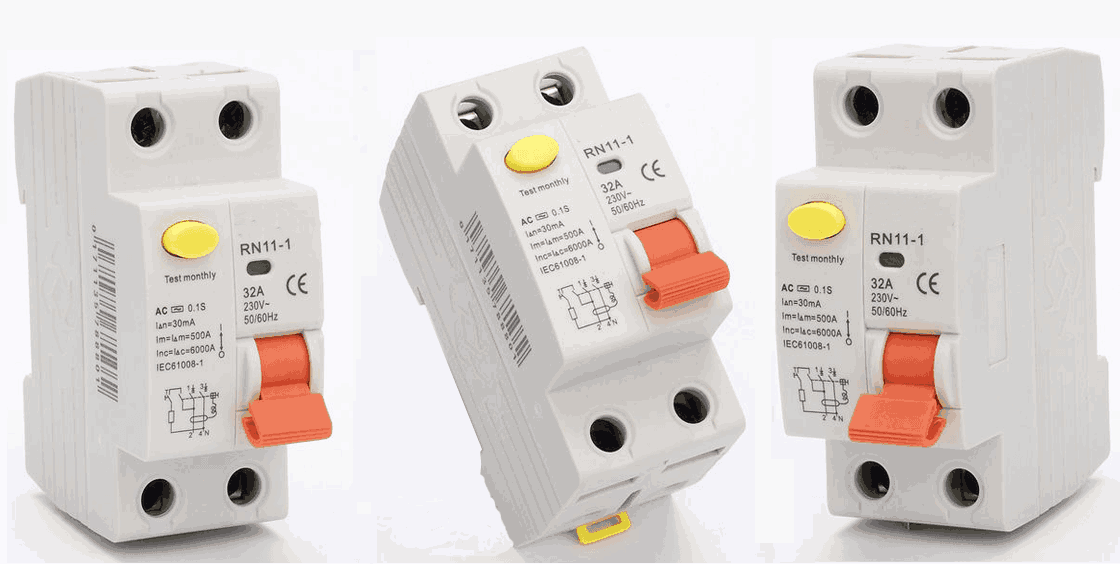
Common RCCB Problems and Solutions: A Complete Troubleshooting Guide (2026)
An RCCB breaker is one of the most important safety devices in any home, shop, or industrial panel. It constantly compares the current flowing through the live and neutral wires, and the moment it senses a leak, it cuts off power in milliseconds — protecting people from electric shocks and buildings from fire. But like any switchgear component, an RCCB can develop faults over time. Frequent tripping, failure to reset, or complete failure are common complaints from homeowners and electricians across Pakistan.
This guide breaks down typical RCCB circuit breaker issues, explains why they occur, and offers workable, secure remedies along with all the information you need to fix them. Know about RCCB ratings, wiring, and buying the right unit in Pakistan. Understanding RCCBs in electrical panels is essential for anyone responsible for installing a home, shop, or factory.
The Basics
What is an RCCB and how does it work?
The remainder of the current circuit (rccb) (also known as the current residual device or RCD) is a safety switch that monitors the balance between current input to the circuit by live wire and current return by neutral wire. Under normal and healthy conditions, both values are almost equal. Simply put, RCCB is designed to do the same thing: continuous monitoring of leaks and cutting energy as soon as it is detected.
How does RCCB work? If the current survives on the circuit with a faulty wire, faulty equipment, or someone accidentally touching a living area, that current no longer returns with the neutral wire. Creates asymmetry. The RCCB reacts fast and cuts off the power supply when the leakage is beyond the threshold that has been set, which is typically 30 mA for personal safety or higher for industrial use
This is the basic principle of how the Rccb works and applies to either working with a 2-pole home unit or complex 3-step rccb work on Business Panel settings.
This is the basic principle of how an RCCB works, and it applies whether you are dealing with a 2-pole domestic unit or a heavy-duty 3-phase RCCB working principle setup on an industrial panel.
Uses of an RCCB include:
- Protection against electric shock from earth leakage
- Prevention of fires due to insulation failure or leakage current
- Safety compliance for homes, offices, factories and construction sites
Troubleshooting
Common RCCB problems and their causes
1. RCCB tripping frequently (Nuisance Tripping)
This is by far the most reported problem with any RCCB breaker.
This commonly happens because of one or more of the following:
- Defective or old equipment-old motors, water heaters, washing machines, or geysers develop small internal leaks over time, to which the RCCBdetects and reacts.
- Moisture for cables or shipping boxes-wet weather, damp toilets, kitchens, or poorly covered outer walls allow it to leak through the currently wet cover.
- Overloaded circuits – Too many appliances running on one circuit can create small leakages that become tripped.
- Using the wrong RCCB type for today’s electronic equipment can cause problems because LED drivers, inverters, solar systems, VFDs, and EV chargers may produce leakage currents that a conventional type AC RCCB can incorrectly detect as a fault.
Solution: Isolate the problem by switching off all connected MCBs, then switching them on one at a time to see which circuit is causing the trip. If electronic loads are involved, upgrade to a Type A or Type F RCCB designed for modern appliances. For specific DC leakage applications, a Type B RCCB may be required. For sensitive areas such as bathrooms or outdoor circuits, a 10mA RCCB offers an extra layer of protection compared to the standard 30mA unit.
2. Neutral earth fault causes random tripping
A less obvious but very common cause is the neutral wire touching the earth wire on the underside of the RCCB — often within old wiring, a damaged junction box, or a faulty DIY repair.
This creates an unwanted current mechanism in which the Rccb reads as a leak error, although there is no error.
Solution: use a coating tester or multimeter to test the continuity between the neutral and the ground. This test should be carried out by a trained electrician, since poor handling of direct circuits is dangerous.
3. RCCB never trips at all (failure to trip)
An RCCB that never trips – even during a real fault – is much more dangerous than one that trips frequently, because the homeowner assumes that protection is present when it is not.
Common causes include:
- Internal mechanical wear after years of service
- Corrosion inside the unit due to moisture or dust
- Incorrect or lower standard rccb circuit breaker, i.e., IEC standards are not met
Solution: test your rccb monthly using a built-in Test button. To assess if it fails to go replace , it is immediately appropriate for the value of the brand Sigma Electric Schneider chant or ABB specifications from units to curry. Whether you choose Schneider Rccb Unit ABB RCCB Y or Chint RCCB d always make sure the product has a correct certificate / before installation
4. Incorrect wiring or installation errors
Wiring errors are very common, especially with DIY installations or unlicensed electricians:
- Neutral and live wires reversed at input/output terminals.
- Loose terminal screws causing intermittent contact.
- Incorrect RCCB connection configurationbetween RCCB and downstream MCBs
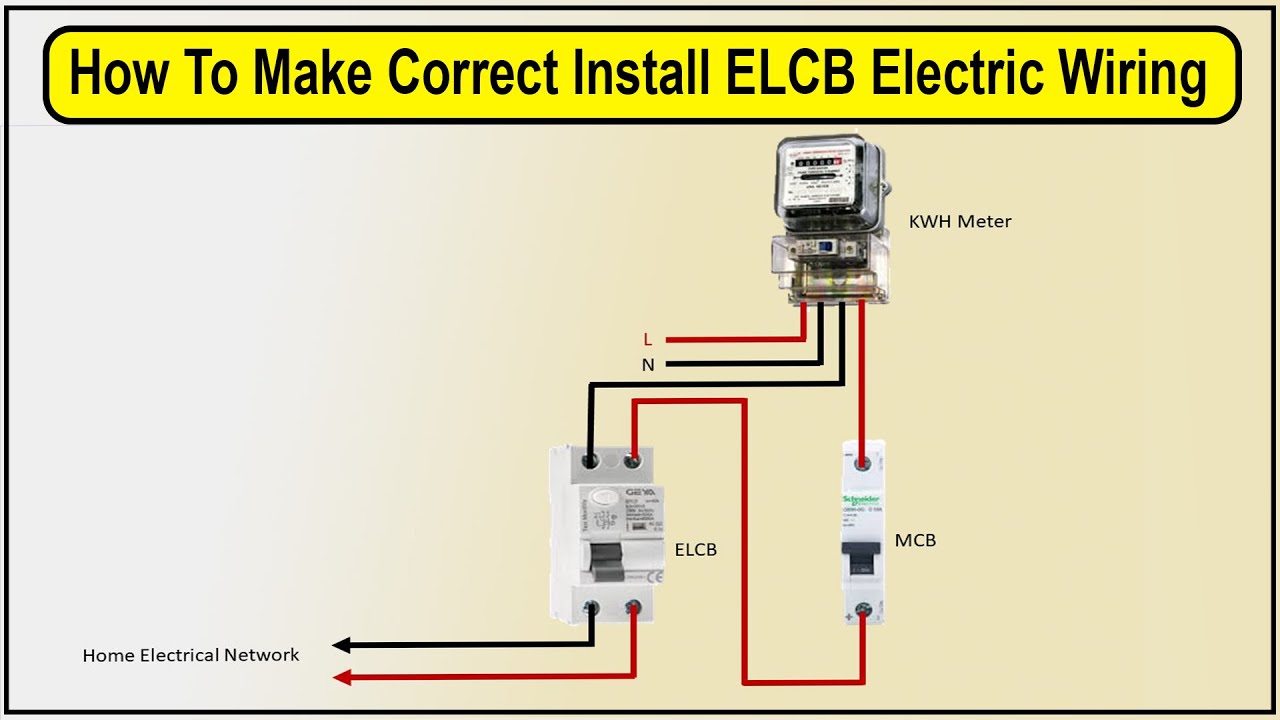
Solution: Always verify the installation against a certified RCCB connection diagram — whether it’s a simple 2-pole RCCB connection diagram for a single-phase home circuit or a 4-pole RCCB connection diagram for a three-phase commercial setup.
During installation, the RCCB wiring diagram and double-view RCCB switch hooks in a free style without resistance; most of these errors will close before they start. If you are unsure, you need to verify the wiring by a licensed electrician before activate the control panel.
5. Incorrect RCCB rating for the load
Installing an undersized or mismatched RCCB is a common mistake that leads to constant tripping or, worse, no protection.Solution: Match the RCCB rating to your actual load and application. A quick RCCB rating chart reference:
Installing an undersized or mismatched RCCB is a common mistake that leads to constant tripping or, worse, no protection.
Solution: Match the RCCB rating to your actual load and application. A quick RCCB rating chart reference:
| Application | Typical current rating | Sensitivity |
|---|---|---|
| Domestic lighting circuits | 16A–25A | 30mA |
| Domestic power sockets | 32A–40A | 30mA |
| Kitchen / bathroom circuits | 25A–32A | 10mA–30mA |
| Commercial distribution boards | 40A–63A | 30mA–100mA |
| Industrial main panels | 63A–125A | 100mA–300mA |
If you are unsure which rating suits your building, Jawad Electric’s technical team can help you calculate the correct load before purchasing.
6. Surge and Overload Damage
Power increases, grid fluctuations, or sudden power increases can damage the internal equipment of the RCCB, even if it does not move immediately. Over time, it reduces the life of the device and can cause it to not be good.
Solution: install a surge protection device (SPD) in front of your RCCB, and avoid connecting high-power devices such as heaters, motors, or ACs without proper circuit.
Set as the default language
Many users get the difference between ELBC and RCCB or RCCB versus RCD because these terms are often used interchangeably but not differently.
Many users find the difference between elcb and rccb or rccb versus rcd ambiguous because these terms are often used interchangeably but are not identical:
| Device | Function |
|---|---|
| RCCB | Detects earth leakage only; does not protect against overload or short circuit. |
| ELCB | Older technology, often voltage-operated; largely replaced by RCCBs. |
| RCD | Common term – RCCB is a type of an RCD. |
| RCBO | Combines RCCB and MCB functions, protecting against earth leakage, overload, and short circuits. |
When comparing MCB and RCCB (also rccb and mcb), be mindful of the following: An MCB protects against overload and short circuit, and an RCCB protects against earth leakage and shock hazards.
For complete protection, many installations now use a combination of MCB, MCCB, and RCCB on the same distribution board, or a single RCBO where space is limited.
For quick reference, MCB MCCB is a complete form of RCCB Elcb: small circuit breaker, small circuit breaker, residual current circuit breaker, and earth leakage circuit breaker.
The difference between RCD and RCCB is mainly of the name — RCCB is the modern version of RCD, and it is the most common type used today. Which is better, ELCB vs. RCCB, RCCBs are modern standards because they directly detect current imbalances rather than relying on electrical sensing mechanisms used by older ELCBs, which may fail in certain non-operating conditions.
Prevention
RCCB Maintenance Checklist
To avoid the above-mentioned frequent problems, follow this simple monthly routine:
- Press the test button on your RCCBonce a month — it should trip immediately.
- Check the panel for moisture, corrosion, or loose wires.
- Do not load the same circuit with many powerful devices.
- Every 1-2 years, especially in old buildings, it is necessary to contact a qualified electrician to check the wiring.
- Casey has been repairing or replacing RCCBsfor 10 years.
Reading the Diagram
RCCB symbol and circuit diagram explained.
Each RCCB circuit layer has a common feature on its body and electrical drawing and must identify its performance during installation and problem solving. The RCCB symbol often shows the switch mechanism with a coil and test buttons that perform the innermost sense of the element, corresponding to testing the monitor’s current balance of live and neutral.
On an RCCB circuit diagram, you will typically see:
- Incoming supply – the live and neutral wires entering from the main distribution board.
- Sensing coil (CT) – a toroidal current transformer that continuously compares the live and neutral currents
- Trip mechanism – connected to the sensing coil; activates the moment an imbalance is detected.
- Test button circuit – a built-in resistor path that deliberately creates a small imbalance to verify that the RCCBis operating
- Outgoing terminals — connected downstream to individual MCBsprotecting separate circuits.
Reading this diagram correctly is of utmost importance when you are making an RCCB connection for the first time, as reversing the live and neutral at the input or output tier
Buying the Right RCCB in Pakistan
If your RCCB breaker keeps tripping, fails to reset, or you are setting up a new panel entirely, the safest long-term solution is to install a certified, correctly rated unit from a trusted supplier. Jawad Electric supplies genuine RCCB circuit breaker units — including Sigma Electric (ISO9000 and ASTA certified), along with other trusted global brands — for residential, commercial, and industrial projects in Lahore and Pakistan.
Whether you need a 2-pole unit for a home circuit or a 4-pole industrial-grade RCCB, our technical team can help you choose the correct rating and type for your specific load. If you are comparing RCCB price or looking for the current price of an RCCB breaker, contact us directly for the latest RCCB price in Pakistan and RCCB circuit breaker price in Pakistan, as prices vary by brand, rating, and pole configuration.
FAQS
Frequently Asked Questions
What is the specific form of rccb?
RCCB is short for differential current switch, a safety device that cuts off power when a leak is detected to the ground.
Why does my RCB keep wandering around for no reason?
Annoying decomposition is usually caused by equipment ageing, circuit overload, or moisture without adequate internal leaks between the RCCB type and the connected electronic load.
What is the difference between an RCCB and an RCBO?
An RCCB only protects against earth leakage. An RCBO combines this protection with overload and short-circuit protection, like an MCB.
Can I reset a tripped RCCB myself?
Yes — switch off all connected loads, then switch the RCCB back on. If it trips again immediately, do not force it. Call an electrician to diagnose the fault.
How often should an RCCB be tested?
Test the built-in test button once a month. If the unit does not trip during this test, it should be replaced immediately.
Where can I buy a genuine RCCB in Lahore or Pakistan?
Jawad Electric provides certified RCCB breakers from trusted brands in Lahore, Karachi, Islamabad and other major cities of Pakistan. Contact our team for an accurate rating and price for your project.

Related Posts
A wet hand on a geyser switch. A washing machine with…

A 4 pole breaker switches all four conductors of a three-phase…
This Post Has 0 Comments